
A generic OBD2 scanner only reads standardised emissions codes, while manufacturer platforms like XENTRY, ISTA+ and ODIS read every module in the car, run guided tests and code new parts. For a German car, the manufacturer platform is what actually identifies and fixes the fault.
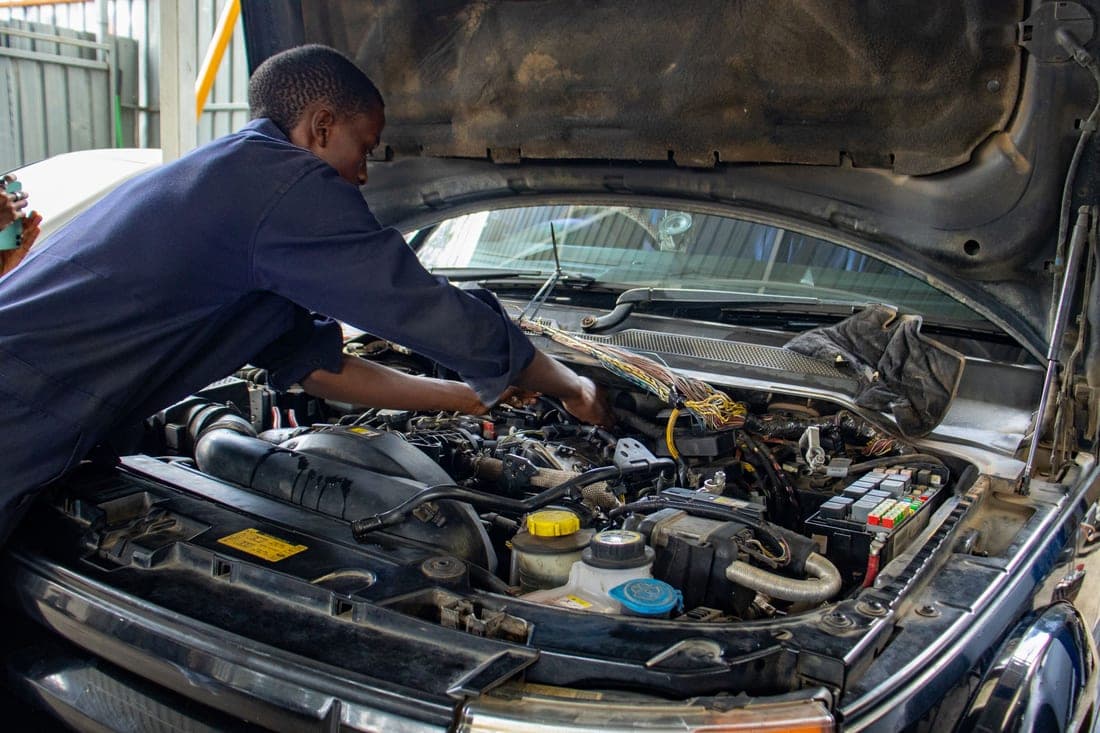
Many Nairobi workshops advertise computer diagnostics but use a universal handheld scanner. These tools were designed for emissions checks, not for the deep electronic architecture of a modern German vehicle.
Generic OBD2 tools typically read only powertrain emissions codes — a fraction of the fault codes stored across a German car's many control units.
Manufacturer platforms talk to every module: gearbox, suspension, comfort, safety and body electronics, surfacing faults a generic tool never sees.
Only the manufacturer platform can perform guided diagnostics, adaptations and coding — essential when a new part has to be matched to the car.
This is why a car can be declared fault-free on a generic scanner yet still have a warning light: the fault lives in a module the scanner cannot reach.
Questions, answered.
It can read basic emissions codes, but it cannot read most module faults, run guided tests or code new parts, so it often misses the real problem on a German vehicle.
We use ISTA+ for BMW, XENTRY for Mercedes-Benz, ODIS for Volkswagen and Audi, and IDS for Porsche and Range Rover — the same platforms dealerships use.
Need this sorted on your car?
Book a diagnostic at the branch nearest you and get a printed fault report.
Book a service